The Hobbit
Firefly LaneThe Hobbit is a paperback that links Kate’s care for Marah across two moments of vulnerability: when she gives her daughter a book to turn to in sadness and confusion, and when Marah reads it aloud beside her dying mother. Its return makes the novel more than a treasured childhood favorite; it becomes a practical form of comfort and a way for Marah to carry forward what Kate once gave her.
The Gift and Its Intended Use
Kate gave Marah the book when she was younger, telling her that someday she might feel sad and confused and need it. The gift was therefore bound from the beginning to a future moment of distress. The story does not specify precisely why Kate chose this particular novel, but it establishes the book as something Marah could return to when ordinary reassurance might not be enough.
Much later, as Kate’s illness advances, Marah recalls that promise. For several weeks she has tried to read the book, but could not manage it. Her difficulty marks the distance between possessing a source of comfort and being able to use it: the meaning of the gift has arrived, but grief initially obstructs the reading Kate anticipated.
Reading Together as Care
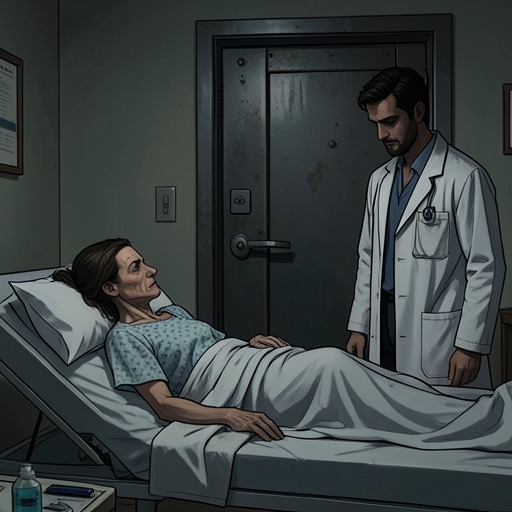
Marah brings the paperback to Kate while the family is gathered around her. She explains that she has worked out why she could not read it before: everyone needs it. She picks up the copy Kate gave her, and Kate, with an arm around her boys, agrees to let her begin. The scene widens the gift beyond its original mother-daughter address; the book now offers a shared ritual for Kate, Marah, and the boys.
The opening line, “In a hole in the ground, there lived a hobbit …”, gives the reading a concrete beginning. Marah’s voice is only slightly unsteady at first, but she finds strength as the story takes hold. The moment does not undo the family’s grief or Kate’s illness. Instead, it gives them something to do together within the time they have: listen, read, and remain close.
Inheritance and the Limits of Comfort
The book’s passage from Kate to Marah gives the scene its generational shape. Kate once offered it as something her daughter might need; now Marah uses that inheritance to care for Kate and to include her brothers. The paperback is an object carried across different stages of family life, and the act of reading makes its meaning active rather than merely remembered.
Its comfort remains limited. After the family reading, Kate continues to weaken, and the narrative returns to the fact that she is fading. The novel cannot alter that outcome. Its significance lies instead in the connection it makes possible: a gift prepared for future sadness becomes, at the bedside, a shared voice and a small continuity between mother and daughter.